Body Language Strategies to Impress During Interviews

The Power of Non-Verbal Communication
Body language is a crucial component of communication that can often speak louder than words. During interviews, non-verbal cues can significantly impact the interviewer’s perception of your confidence, credibility, and enthusiasm for the role.
Understanding how to harness the power of body language can therefore be a game-changer in your job search journey.
A study by Albert Mehrabian suggests that 55% of communication is non-verbal. This means more than half of your message is delivered through facial expressions, posture, gestures, and eye contact. Mastering these elements can help you project an image of competence and professionalism.
Preparing Your Body Language Strategy
As with any skill, preparation and practice are key to mastering effective body language during interviews. Here’s a checklist to get started:
- Research the company culture: Understanding the company’s ethos can guide how formal or relaxed your body language should be.
- Conduct mock interviews: Practice with a friend or mentor and request feedback specifically on your non-verbal communication.
- Record yourself: Video yourself answering typical interview questions to observe your gestures and expressions.
- Mirror positive body language: Watch videos of confident speakers and note their body language techniques.
First Impressions: The Handshake
The handshake is often the first physical interaction during an interview, setting the tone for the meeting. Aim for a firm, but not overpowering grip to convey confidence and approachability. A limp handshake might suggest uncertainty, while a crushing grip could be perceived as aggressive.
Consider practicing with someone to get feedback on the firmness and duration of your handshake. Remember to make eye contact and smile simultaneously to demonstrate warmth and sincerity.
A Realistic Scenario
Imagine meeting a hiring manager who is visibly tired from a day full of interviews. As you offer a warm handshake and smile while maintaining eye contact, you immediately set yourself apart as engaging and energetic. This positive first impression can influence the entire flow of the interview in your favor.
Mastering Posture: Sit Confidently
Your seating position communicates volumes about your self-assurance. Slouching may indicate disengagement or lack of interest, while sitting too stiffly might make you appear nervous.
Sit up straight with your back against the chair, shoulders back, and both feet flat on the ground. This position projects confidence and keeps you physically grounded, which can help mitigate anxiety.
The Role of Gestures
Gestures are powerful tools for emphasizing points and aiding communication. However, they should be natural and controlled to avoid distracting the interviewer.
- Use open gestures: Open palms suggest honesty and openness. Avoid crossing arms or placing hands in pockets, as these can imply defensiveness or insecurity.
- Keep it subtle: Avoid excessive hand movements that could detract from your words. Controlled gestures that complement speech are most effective.
The Art of Eye Contact
Eye contact is essential in establishing trust and engagement. It shows that you are attentive and invested in the conversation.
Aim for steady but natural eye contact, avoiding prolonged staring which can be unsettling. When in panel interviews, distribute your gaze among all interviewers to ensure everyone feels included in the conversation.
Scenario: Managing a Panel Interview
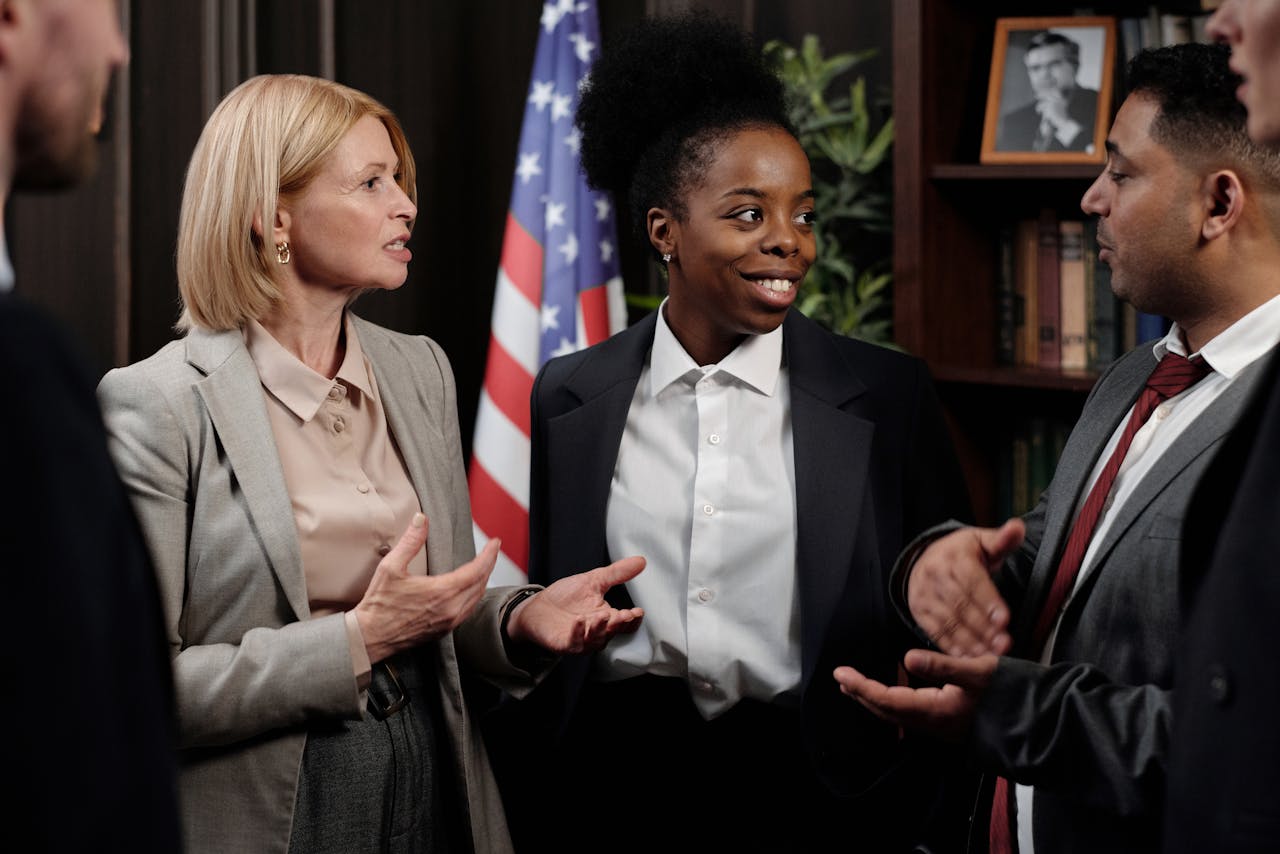
You’re facing a panel of three interviewers. By maintaining consistent eye contact with each panel member when they speak, you engage each person directly. This approach fosters a connection with all members, enhancing their collective perception of you as attentive and considerate.
Facial Expressions: Conveying Enthusiasm and Interest
Your facial expressions should reflect genuine enthusiasm for the position and the company. A genuine smile goes a long way in building rapport and making you more memorable.
- Avoid a neutral expression: An impassive face might be perceived as disinterest or boredom.
- Smile appropriately: Smiling at appropriate moments conveys warmth and positivity but remember to match the tone of the conversation.
Navigating Cultural Differences
Cultural norms can affect perceptions of body language. Research the cultural expectations if interviewing with international companies or diverse teams. What might be considered polite in one culture could be interpreted differently in another.
For instance, while direct eye contact is valued in Western cultures as a sign of confidence, it might be seen as disrespectful or aggressive in some Asian cultures where indirect eye contact is preferred.
The Science Behind Body Language
Understanding the psychology behind body language can help you better control it during interviews. Non-verbal cues are processed by the brain faster than verbal ones, influencing first impressions quickly. Amy Cuddy’s research suggests that ‘power poses’ can even alter hormone levels in your body, increasing testosterone (associated with confidence) and decreasing cortisol (related to stress).
Practical Exercise: Power Posing
- Find a private space before your interview.
- Stand tall, feet apart, hands on hips - akin to Wonder Woman's pose.
- Hold this pose for two minutes to boost feelings of confidence.
Troubleshooting Common Body Language Mistakes
- Nervous habits: Identify gestures like tapping feet or fiddling with objects which might indicate nervousness.
- Lack of energy: Infuse energy into your posture and expressions if you tend to come across as too relaxed or disinterested.
If you're unsure about how you're coming across, consider feedback from peers who have observed you during practice sessions or interviews.
The Role of Feedback
Seek feedback after mock interviews from mentors or colleagues focusing specifically on your non-verbal cues. They may notice nervous habits or areas where your body language doesn’t align with your verbal messages.
This iterative process allows for continuous improvement, helping refine your body language skills over time to enhance interview performance substantially.